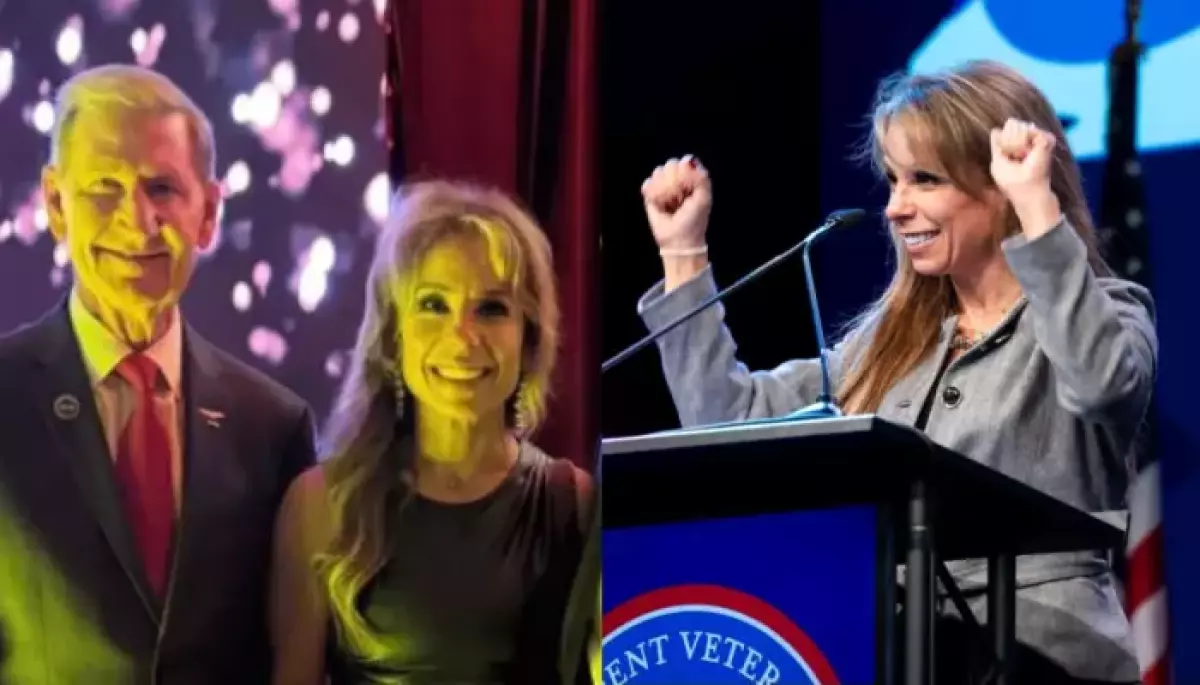
The sudden resignation of Ohio State University President Ted Carter sent ripples through the academic and political landscape, quickly becoming a topic of intense public scrutiny. While Carter's initial statement cited a personal misjudgment involving "inappropriate access" to university leadership for a woman associated with her private business, it was the subsequent media reports that brought a specific name to the forefront: Krisanthe Vlachos. Her association with Carter and her role as host of the veterans-focused Callout Podcast quickly positioned her at the nexus of a unfolding controversy that ultimately led to a top university president's exit.
The Resignation of Ted Carter: A Public Acknowledgment of Misjudgment
On a Monday that would forever alter the trajectory of Ohio State University's leadership, President Ted Carter, a figure of significant public prominence, announced his resignation. His statement to the university’s board of trustees was direct, if initially sparse on details: he had made a "mistake" by granting "inappropriate access to Ohio State leadership" to a woman seeking assistance with her private business. The admission came with the backing of his wife, Lynda Carter, underscoring the personal gravity of the situation.
Carter, 66, did not elaborate on the specific circumstances that led to his decision, leaving a vacuum that was soon filled by media speculation and investigative reporting. It was NBC4 Columbus that first reported a potential link between Carter's resignation and his relationship with Krisanthe Vlachos, host of the Callout Podcast. This revelation quickly shifted the focus from a generic "woman" and "private business" to a specific individual and her media platform, igniting a public discussion about ethics, influence, and the boundaries of professional conduct in higher education.
Krisanthe Vlachos: The Podcaster at the Center of the Controversy
At the heart of the unfolding narrative is Krisanthe Vlachos, a dynamic figure described as a "force of nature wrapped in a charming smile." A recent graduate of the University of Florida, Vlachos's academic credentials include a degree in Journalism with a minor in Political Science, showcasing a foundation rooted in communication and public affairs. Her time at UF was marked by active participation in campus life, including contributions to the student newspaper, The Independent Florida Alligator, and leadership roles in organizations like the UF chapter of the Society of Professional Journalists.
Vlachos's passion for storytelling and community engagement, particularly her unwavering commitment to veterans' advocacy, forms the core of her public persona. This commitment found its primary outlet in the Callout Podcast, a platform dedicated to sharing the stories and experiences of military veterans.
The Callout Podcast and Its Mission
The Callout Podcast, hosted by Krisanthe Vlachos, is designed to be a voice for veterans, focusing on their journeys, challenges, and successes. Through interviews and discussions, the podcast aims to bridge the civilian-military divide and highlight important issues facing the veteran community. Despite its noble mission, the podcast maintained a relatively niche audience, with most episodes garnering only a few hundred views. This makes the frequent appearances of a high-profile figure like Ted Carter, who featured in nine of 14 episodes in recent months, particularly noteworthy.
Carter's regular presence on the podcast, often sharing his insights and support for veteran initiatives, painted a picture of a strong collaborative relationship. A photograph from the 2026 national conference of Student Veterans of America in Colorado Springs further solidified this, showing Carter alongside Vlachos and the organization's president, Cory Boatwright. Vlachos's caption for the image, describing Carter as her "dear friend and mentor," underscored a relationship that extended beyond a simple professional interview format.
The Nature of the Relationship: "Dear Friend and Mentor"
The "dear friend and mentor" description offered by Vlachos provides crucial insight into the perceived closeness of her relationship with Ted Carter. While mentorship can be a valuable aspect of professional development, when it intersects with a public official's role and a private business venture, the lines of appropriate conduct can become blurred. For a university president, the perception of favoritism or undue influence, particularly concerning a private entity seeking "assistance" from university leadership, can raise serious ethical questions.
The frequent, high-profile appearances by Carter on a relatively small podcast, coupled with Vlachos's own description of their bond, contributed to the public's understanding of the "inappropriate access" cited in Carter's resignation. It suggested a level of personal investment that could be seen as compromising the impartial nature expected of a university president.
Unpacking the "Inappropriate Access" and Sponsorships
The core of the controversy revolved around what Ted Carter termed "inappropriate access." For a public institution like Ohio State University, "inappropriate access" typically refers to situations where an individual or entity gains undue influence, preferential treatment, or direct contact with decision-makers without following established protocols. This could manifest as leveraging personal relationships to secure university resources, partnerships, or promotional opportunities that might not otherwise be available or subject to rigorous review.
The economic development organization JobsOhio confirmed its sponsorship of the Callout Podcast, stating that its involvement was part of outreach efforts consistent with its mission and had gone through "standard and rigorous legal process." While JobsOhio's internal processes may have been sound, the question for OSU was whether Carter's involvement with Vlachos's podcast created a conflict of interest or an appearance of impropriety by implicitly or explicitly linking the university to a private venture without sufficient oversight.
Evidence from the podcast's activities further illustrates these connections:
- In January 2025, the Callout Podcast co-sponsored "Last Out: Elegy of a Green Beret" at Ohio State. This event, involving veterans and military family members, was organized in partnership with the university, JobsOhio, American Electric Power, and the Columbus Partnership. This directly links the podcast to university events and resources.
- Later that year, Ohio State was listed as a sponsor for the "Gaff-N-Go Rodeo" in Richmond, Virginia, an event aimed at connecting military veterans with power line workers. A video from the event confirmed this university sponsorship, further intertwining OSU's name and brand with the podcast's initiatives.
These instances highlight a pattern where Krisanthe Vlachos's private business venture, the Callout Podcast, seemingly benefited from direct association with Ohio State University, its leadership, and its brand. The involvement of other significant entities like JobsOhio further complicated the picture, raising questions about how these partnerships were initiated and whether proper ethical firewalls were in place. The situation underscores the critical need for public officials to maintain clear boundaries between their public duties and private associations, especially when those associations involve commercial interests.
Broader Implications and Lessons Learned
The resignation of Ted Carter, influenced by the revelations surrounding Krisanthe Vlachos and the Callout Podcast, serves as a stark reminder of the rigorous ethical standards expected of leaders in public institutions. For Ohio State University, the episode has undoubtedly triggered a period of introspection regarding its internal policies on partnerships, sponsorships, and the conduct of its top officials. Any perceived breach of trust can significantly impact an institution's reputation, affecting everything from donor relations to student enrollment and faculty morale.
From a broader perspective, this incident offers several crucial lessons:
- Transparency is Paramount: Public officials must operate with an utmost degree of transparency, ensuring that all engagements, particularly those that blend personal relationships with professional responsibilities, are meticulously documented and adhere to strict ethical guidelines.
- Clear Boundaries are Essential: The line between personal relationships and professional duties, especially for those in positions of power, must be clearly defined and rigorously maintained. Even the appearance of impropriety can be as damaging as actual misconduct.
- Due Diligence in Partnerships: Organizations partnering with public institutions, and vice-versa, must conduct thorough due diligence not only on the nature of the partnership but also on the individuals involved to ensure ethical compliance and avoid conflicts of interest.
- Scrutiny is Inevitable: In the age of instant information and social media, public figures are under constant scrutiny. Any connections, particularly those involving private businesses, can quickly become public knowledge and warrant investigation.
Practical Tip for Public Officials and Institutions: Establish and regularly review comprehensive ethics policies that specifically address potential conflicts of interest, sponsorship guidelines, and the appropriate use of institutional resources. Implement mandatory training programs to ensure all leadership understands and adheres to these policies. When in doubt, err on the side of caution and seek guidance from legal and ethics committees before proceeding with any venture that could be perceived as blurring personal and professional lines.
The narrative surrounding Krisanthe Vlachos's connection to the Ted Carter resignation highlights the delicate balance public leaders must strike between fostering relationships and upholding institutional integrity. It serves as a potent case study on the critical importance of ethical leadership, transparency, and the maintenance of clear boundaries in public service. As institutions navigate an increasingly complex landscape, these principles remain more vital than ever in preserving public trust and safeguarding their foundational missions.