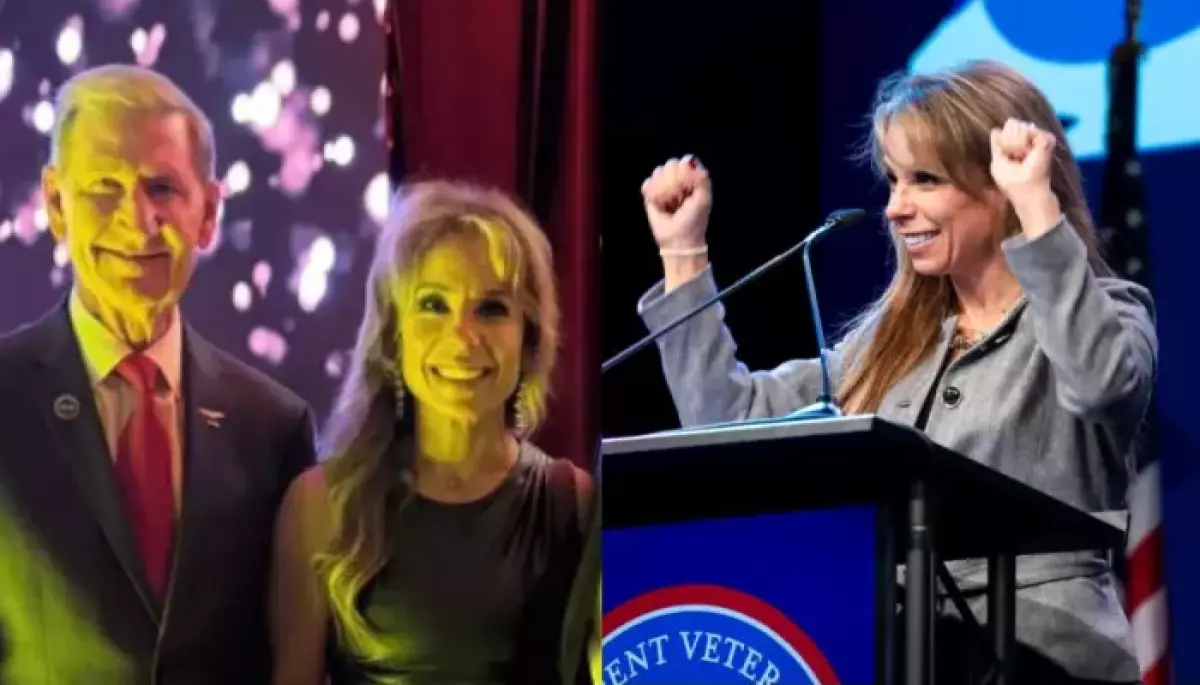
The corridors of academia often buzz with intellectual discourse, groundbreaking research, and the daily operations of institutional leadership. However, every so often, an event sends ripples through the system, drawing public scrutiny and raising questions about ethics, influence, and the delicate balance between public and private interests. Such is the case with the recent, abrupt resignation of Ohio State University President Ted Carter, an exit that quickly became entwined with the name of podcaster Krisanthe Vlachos.
Carter's departure from one of the nation's largest and most prestigious universities sparked immediate speculation. His candid admission of granting "inappropriate access" to university leadership for a woman connected to her private business pointed to a deeper narrative. As details emerged, the spotlight intensified on Krisanthe Vlachos, a figure known for her work in veterans' advocacy through the "Callout Podcast." This article delves into the circumstances surrounding Carter's resignation, explores the background of Krisanthe Vlachos, and examines the connections that ultimately led to a high-profile leadership change at Ohio State.
Unpacking the Resignation: Ted Carter's Departure from Ohio State
On a Monday that sent shockwaves through the Ohio State community and beyond, President Ted Carter, 66, announced his resignation. His statement was stark and to the point: he had made a "mistake" by allowing "inappropriate access to Ohio State leadership" to an individual seeking assistance with her private business. While Carter did not initially elaborate on the specifics of the situation, his acknowledgment of wrongdoing and immediate stepping down spoke volumes about the gravity of the circumstances. He also noted that his decision had the full support of his wife, Lynda Carter, with whom he has been married for nearly 45 years.
The swiftness of Carter's exit from such a prominent role underscored the seriousness of the ethical lapse. For a university president, whose position demands the highest standards of integrity and transparency, any breach of trust concerning access or influence can have profound implications for the institution's reputation and its stakeholders. Reports soon began to surface, notably from NBC4 Columbus, connecting Carter's resignation to Krisanthe Vlachos, the host of a podcast focused on veterans. This connection immediately shifted the narrative from a general admission of error to a specific, identifiable link, prompting further investigation into the nature of their relationship and its impact on university operations.
Who is Krisanthe Vlachos? A Glimpse into the Podcaster's World
At the center of this unfolding story is Krisanthe Vlachos, described by those who know her as a "force of nature wrapped in a charming smile." Her journey into the public sphere is rooted in a strong academic foundation and a clear passion for advocacy. A recent graduate of the University of Florida, Vlachos earned a degree in Journalism with a minor in Political Science. This educational background provided her with the skills and perspective essential for effective communication and community engagement.
During her time at UF, Vlachos was far from a passive student. She actively contributed to the student newspaper, The Independent Florida Alligator, where her articles frequently sparked thoughtful discussions. Her leadership capabilities were also evident through her service on the executive board of several student organizations, including the UF chapter of the Society of Professional Journalists. This early engagement highlights a consistent commitment to storytelling, community service, and making a tangible impact.
Vlachos's passion eventually led her to create the Callout Podcast, a platform dedicated to veterans' issues. The podcast serves as a crucial voice for military veterans, shedding light on their experiences, challenges, and successes. It aims to connect, inform, and advocate for those who have served. This mission resonated with organizations like JobsOhio, a state economic development group, which sponsored the podcast as part of its broader outreach efforts to veterans. JobsOhio affirmed that its involvement underwent "standard and rigorous legal process," aligning with their mission to support and engage various communities.
The Nexus of Influence: Carter, Vlachos, and The Callout Podcast
The link between President Carter and Krisanthe Vlachos became apparent through their extensive professional interactions, particularly around the Callout Podcast. Public records and social media posts revealed that Carter had become a regular fixture on the veterans-focused show. Out of 14 episodes published in a recent period, Carter featured prominently in nine, suggesting a deep and consistent involvement in the podcast's content.
Their connection extended beyond the studio. A photograph from the 2026 national conference of Student Veterans of America in Colorado Springs in January captured Vlachos alongside Carter and Cory Boatwright, the organization's president. In the accompanying caption, Vlachos openly described Carter as her "dear friend and mentor," indicating a relationship that transcended mere professional acquaintance. This personal connection, coupled with Carter's powerful position, raised questions about the nature of the "inappropriate access" he admitted to granting.
Despite Carter's high profile as one of Ohio's most senior public officials, the Callout Podcast maintained a relatively small audience, with most episodes drawing only a few hundred views. This modest reach, however, did not deter significant institutional engagement. For example, in January 2025, the podcast co-sponsored "Last Out: Elegy of a Green Beret" at Ohio State, an event involving veterans and military family members. This performance was organized in partnership with the university itself, JobsOhio, American Electric Power, and the Columbus Partnership. Later that year, Ohio State was listed as a sponsor for the "Gaff-N-Go Rodeo" in Richmond, Virginia, an event aimed at connecting military veterans with power line workers, as documented on the podcast's Instagram account.
Ethical Considerations and the Appearance of Impropriety
The extensive collaboration between a university president and a private podcast, especially one that receives sponsorship from a state economic development agency and involves university resources, naturally raises ethical questions. Key considerations include:
- Conflict of Interest: When a public official grants "access" to an individual involved in a private business, it creates a potential or perceived conflict of interest, particularly if university resources or sponsorships are involved.
- Transparency: The lack of immediate detailed information regarding the nature of the "inappropriate access" fueled speculation and eroded public trust. Transparency is paramount in public service.
- Fairness: Questions can arise about whether other private businesses or individuals would receive similar levels of access or support from the university president.
- Institutional Safeguards: This situation highlights the importance of robust ethical guidelines and oversight mechanisms within public institutions to prevent conflicts and ensure accountability.
Navigating Public Office and Private Endeavors: Lessons from the Vlachos-Carter Link
The circumstances surrounding Ted Carter's resignation and his connection to Krisanthe Vlachos offer crucial insights into the complexities of ethical leadership and the importance of maintaining clear boundaries in public office. For individuals in positions of power, especially within large public institutions, the distinction between personal relationships and professional responsibilities can become blurred, leading to situations that, even if well-intentioned, can compromise institutional integrity.
One primary lesson is the critical need for absolute transparency and the avoidance of even the appearance of impropriety. High-ranking officials must be acutely aware that their actions are under constant scrutiny, and what might seem like a benign personal connection or a supportive gesture can be perceived very differently by the public and by internal stakeholders. Institutions, in turn, must cultivate a culture of strong ethical governance, ensuring that policies regarding external engagements, sponsorships, and access are clear, strictly enforced, and regularly reviewed.
For aspiring leaders and professionals, this case serves as a poignant reminder of the challenges in balancing personal relationships with professional duties. It underscores the value of:
- Clear Disclosure: Always disclose potential conflicts of interest, no matter how minor they may seem.
- Defined Boundaries: Establish and maintain explicit boundaries between personal friendships/mentorships and professional decision-making or resource allocation.
- Consulting Ethics Boards: When in doubt, seek counsel from university ethics committees or legal departments to ensure compliance and avoid missteps.
- Prioritizing Public Trust: The ultimate duty of a public official is to uphold the trust placed in them by the public and the institution they serve.
The incident also highlights the influential role that media, including podcasts, can play in shaping narratives and creating platforms that intersect with powerful figures. While Krisanthe Vlachos's Callout Podcast serves a noble cause in supporting veterans, its interface with university leadership raises broader questions about the ethics of leveraging such platforms in a way that could lead to perceived preferential access or influence.
Conclusion
The resignation of Ohio State President Ted Carter, attributed to "inappropriate access" granted to an individual tied to her private business, has cast a significant spotlight on the intricate relationships that can develop between public officials and private entities. At the heart of this narrative is Krisanthe Vlachos, the passionate host of the veterans-focused Callout Podcast, whose connections with Carter became a central point of the controversy. This incident serves as a powerful case study in the critical importance of ethical leadership, transparency, and strict adherence to institutional policies. It underscores that for those entrusted with public office, the appearance of impropriety can be as damaging as actual wrongdoing, demanding constant vigilance to uphold public trust and ensure the integrity of the institutions they lead.